

IEEA 2027
Speakers
Speaker I
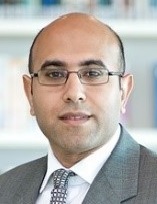
Prof. Hatem
Zeineldin
Khalifa University, UAE
Title: Micro-grid Implementation: Challenges and Solutions
Abstract: Micro-grids are small scale power networks that can consist of distributed energy resources (DERs), energy storage systems (ESS), and loads with the capability of operating in grid-connected or islanded mode. Despite their multiple advantages, there are some technical issues related to the control, stability and protection of micro-grids. The design challenges as well as solutions proposed for micro-grids are highly dependent on the type of the Distributed Generation (DG) being used (synchronous or inverter based) as well as the mode of operation (islanded or grid connected). This talk will shed some light on some of the challenges associated with micro-grids dominated by inverter based DG and operating in an islanded fashion. The impact of micro-grid droop control on load flow analysis, stability and protection will be highlighted. Furthermore, utilizing the DG interface control to facilitate micro-grid protection and enhance micro-grid stability will be discussed.
Biodata: Dr. Hatem Zeineldin received his Bachelor's and master’s degree in Electrical Power and Machines from Cairo University in 1999 and 2002, respectively. He obtained his PhD degree in 2006 from the Electrical and Computer Engineering Department at University of Waterloo. In 2006, he joined Smith and Andersen Electrical Inc. as an electrical engineer where he was involved in several projects related to distributed generation. During that period, Dr. Zeineldin was also hired as a research consultant for a research project that was funded by Natural Resources Canada that focused on protection planning with renewable energy sources. In 2007, Dr. Zeineldin worked as a visiting professor at Massachusetts Institute of Technology (MIT) where he focused on developing new methods for islanding detection of renewable energy sources. In 2007, Dr. Zeineldin joined Masdar Institute and served as the Head of the Department of Electrical Engineering and Computer Science. Dr. Zeineldin was Associate Editor for IEEE Transactions on Smart Grids and IEEE Transactions on Energy Conversion. Dr. Zeineldin is currently a Professor and chair of the Department of Electrical Engineering at Khalifa University. His main research interests include distribution system protection, islanding detection, micro-grids and smart grid design. Dr. Zeineldin’s scholarly output is prolific, with over 200 refereed journal papers and more than 90 refereed conference papers published in leading venues. His work has garnered over 15,700 citations and an h-index of 70, reflecting global recognition for its depth, rigor, and real-world impact. His research has enabled safer, more efficient integration of renewable energy sources, and his optimization algorithms are now referenced benchmarks in the field
Speaker II

Prof.
Hazlie Mokhlis
Universiti Malaya, Malaysia
Title: The Role of Optimization for Sustainable Power System Planning and Operation
Abstract: Research in power system optimization has evolved from focusing primarily on conventional tasks such as unit commitment, load flow, and economic dispatch to addressing more complex challenges. These challenges include adapting to the integration of renewable energy, electric vehicles, and smart grids into power systems. Additionally, the increasing frequency of extreme and unpredictable weather events necessitates optimization to enhance the resilience of power system networks. Some research efforts have explored nature-inspired optimization techniques such as Genetic Algorithms, Particle Swarm Optimization, and Evolutionary Programming to achieve optimal planning and operation of power systems. The primary aim of this talk is to discuss the application of these nature-inspired optimization methods in contemporary power system research. The current challenges facing power systems, particularly those related to renewable energy integration and extreme weather events, will be examined. Potential research areas addressing these challenges through nature-inspired optimization techniques will be highlighted. Finally, examples of research projects utilizing these methods will be presented to illustrate their practical applications.
Biodata: Hazlie Mokhlis obtained the Bachelor of Engineering degree and Master of Engineering Science in Electrical Engineering from University of Malaya in 1999 and 2003 respectively. In 2009, he received his PhD degree from the University of Manchester. Currently he is Professor in the Department of Electrical Engineering, University of Malaya. He is active researcher that has published more than 300 publications in Power and Energy Systems and supervised to completion 40 PhD, and more than 60 Master students. His outstanding research had been recognized in top 2% scientists by Stanford University in 2020 to 2024. He was awarded Top Research Scientist Malaysia by Academic Science Malaysia in 2021 and appointed as Fellow of Academic Science Malaysia in 2024. Besides research, he is active in the development of few Malaysian Standard related to power systems. His research interests focus on improving distribution system performance and resiliency against extreme weather. Prof Hazlie is a Chartered Engineer United Kingdom, Professional Engineer with the Board of Engineers Malaysia, Fellow IET, and Senior member of IEEE. He was Chapter chair for IEEE PES Malaysia session 2020-2022.
Speaker III
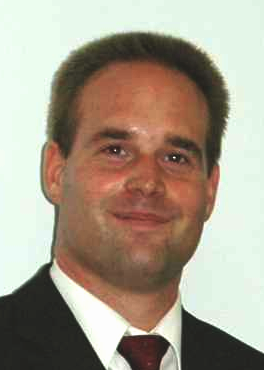
Prof. Dr. Frank Gunzer
German University in Cairo (GUC)
Title: How Quantum Chemistry helps to identify substances in modern spectrometry: spectra, mobilities and AI
Abstract: In environmental sciences it is mandatory to know about which substances are in which quantity in soil, water and air so that e.g. their origin can be determined or their negative consequences be avoided. Hazardous substances are here of special interest. There is not one technique that can do the job in a satisfying manner unless the experimental efforts are immense or the sample concentrations are high, which normally prevents analysis in the field, requiring complex sampling procedures etc. Therefore, a number of techniques have to be combined. In case of unknown substances which are quite often found in the environment, theoretic principles are required that allow calculating a device’s response so that a data base can be constructed. Quantum Chemistry enables here to calculate molecular structures, which in turn allow the calculation of e.g. absorption spectra, or also ion mobilities. Finally, they allow to produce the large training sets required in order to train suitable AI approaches. This presentation shows how quantum chemistry can help when dealing with optical spectroscopy and ion mobility spectrometry, two standard portable detection techniques used in environmental sciences.
Biodata: Prof. Dr. Frank Gunzer received a diploma in physics, specialization plasma spectroscopy, in 1999 and a PhD in physical chemistry, specialization laser mass spectrometry, in 2003, both from the Christian-Albrecht-University in Kiel, Germany. The PhD thesis was awarded the Family-Schindler-Foerderpreis of the university in 2004. In 2003, Prof. Gunzer joined the German University in Cairo (GUC), where he was promoted to Associate Professor in 2011 and to Full Professor in 2017. Since 2022, he is serving as the Vice President for International Affairs of the GUC. In 2014 he founded the GUC Center for Computational Engineering, focusing on FEM simulations of chemical sensors such as ion mobility spectrometers or innovative mass spectrometry devices. Prof. Gunzer’s current research work includes improvement of mass spectrometry devices as well as ion mobility spectrometers supported by theoretical approaches and quantum-chemical methods, with applications in the detection and identification of hazardous substances.
To be announced soon